Travel Schedules and Their Influence on Form in International Fixtures and Domestic Circuits
Tina Lorenz · Jun 13, 2026
Travel Schedules and Their Influence on Form in International Fixtures and Domestic Circuits
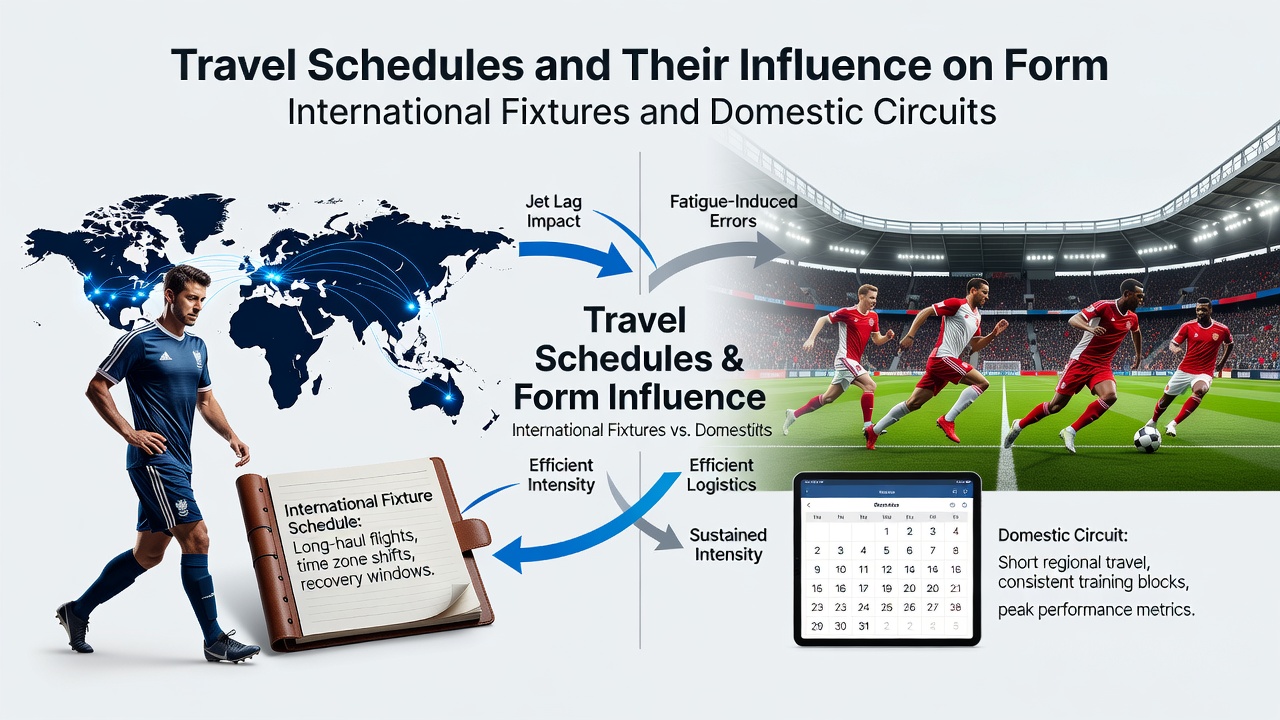
Travel schedules shape athletic performance across continents and within national borders in measurable ways, with data showing how time zone shifts, flight durations, and recovery windows affect outcomes in major competitions. Teams crossing multiple meridians encounter disruptions to circadian rhythms that extend beyond simple fatigue, while domestic circuits present their own patterns of road wear and scheduling density. Researchers tracking these variables through physiological monitoring find consistent correlations between travel load and key indicators such as sprint speed, decision-making accuracy, and injury incidence rates.
International fixtures amplify these effects because athletes often move between hemispheres within days of each other. A squad departing Europe for matches in South America or Asia faces an average of six to nine time zones, a distance that studies link to temporary declines in aerobic capacity and neuromuscular function. Domestic circuits, by contrast, keep competitors within one or two zones yet impose frequent short-haul flights or long bus journeys that accumulate physical stress over a season. Observers note that both contexts require precise planning around match calendars to preserve competitive edge.
Time Zone Displacement and Physiological Responses
Crossing time zones forces the body to realign its internal clock, a process that unfolds at roughly one day per hour of shift for full adaptation. Elite performers in football and cricket report measurable drops in reaction time during the first 48 to 72 hours after arrival, according to data collected by sports science teams. Heart rate variability decreases, sleep architecture fragments, and muscle recovery slows, all of which appear in performance logs from tournaments held in June 2026 when several national sides will navigate transatlantic routes ahead of group-stage fixtures. Domestic schedules rarely trigger such pronounced shifts yet still produce cumulative effects when teams play three or four away games in a fortnight without adequate rest blocks.
Coaches adjust training loads in response, substituting high-intensity sessions with lighter activation work during the initial acclimatization window. Those adjustments correlate with stabilized output in subsequent matches, though full restoration of peak metrics can require five to seven days depending on individual chronotype and prior travel exposure.
Domestic Circuit Patterns and Cumulative Fatigue
Within a single country the distances may be shorter, but the frequency of movement creates different stressors. Basketball and hockey franchises in North America, for example, log tens of thousands of air miles each season across back-to-back games. League data reveals elevated soft-tissue injury rates during stretches that combine three road contests in five days with limited recovery time between flights. Australian rules football provides another case where interstate travel coincides with extreme temperature variations, adding thermal load to the equation. Teams that build buffer days into their calendars demonstrate steadier win percentages over the latter half of the season compared with those operating on tighter turnarounds.
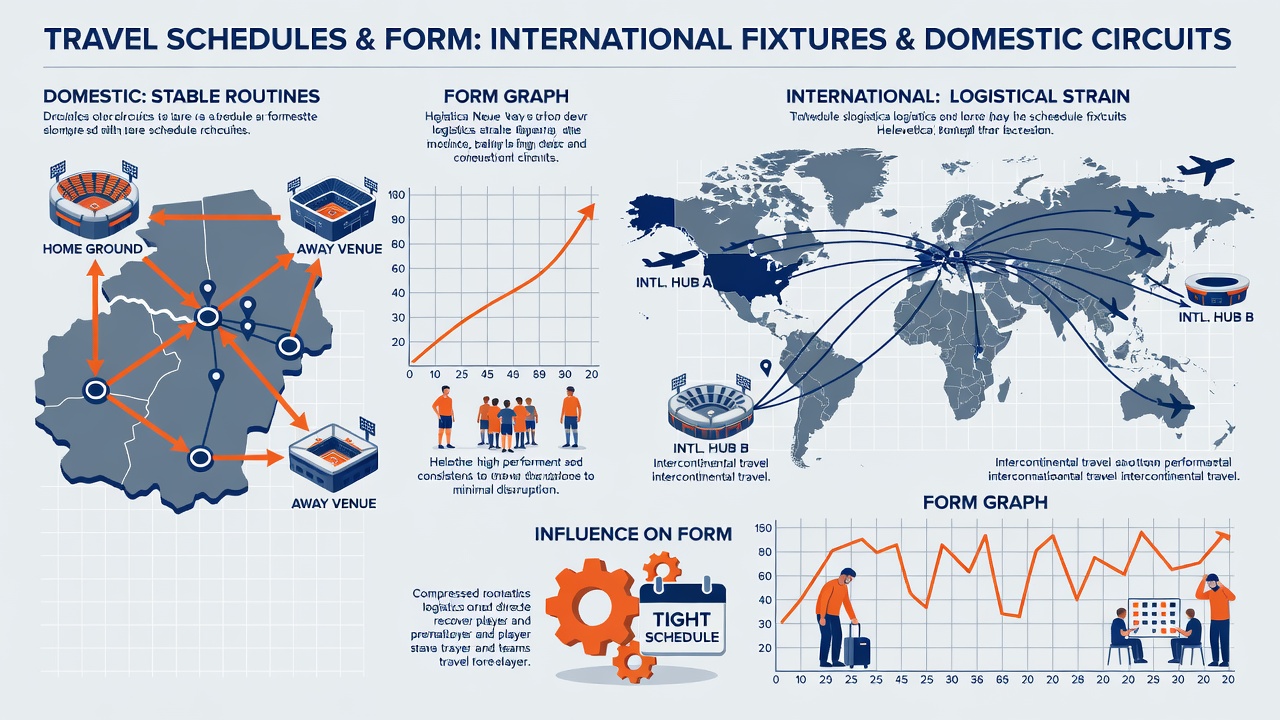
Nutrition timing, hydration protocols, and sleep hygiene interventions become critical tools. Clubs that integrate wearable technology to monitor sleep stages and readiness scores can fine-tune arrival routines, sometimes shifting training sessions to align with local daylight hours rather than origin time zones. These practices reduce the performance gap that otherwise widens between home and away fixtures.
Evidence from Recent Competitions and Research
Longitudinal studies conducted by institutions such as the Australian Institute of Sport track squad-level metrics across multiple seasons and identify travel volume as a statistically significant predictor of match outcome variance. Similar patterns emerge in European handball and rugby union calendars, where continental travel occurs weekly during peak months. In June 2026, several confederation qualifiers will test these findings further as squads balance club commitments with national team windows that span disparate time zones. Performance analysts compile pre- and post-travel datasets that show modest but repeatable advantages for sides granted an extra recovery day before kickoff.
Environmental factors compound travel effects. High humidity at destination venues accelerates dehydration, while altitude changes alter oxygen uptake. Teams arriving from sea-level bases into venues above 1,500 meters experience additional decrements in endurance until acclimatization occurs. Domestic circuits sometimes replicate these challenges when leagues schedule games in geographically diverse regions within the same week.
Strategic Planning and Scheduling Adjustments
Federations and leagues increasingly incorporate travel modeling into fixture releases. Algorithms weigh flight duration, time zone differential, and back-to-back constraints to distribute load more evenly across participants. Some competitions now mandate minimum rest intervals between matches separated by long-haul journeys, a policy that data from prior cycles suggests improves overall competitive balance. Individual athletes also adopt personalized jet-lag mitigation plans that combine timed light exposure, melatonin protocols, and strategic napping to accelerate adaptation. These measures do not eliminate travel impact but compress the duration of sub-optimal performance windows.
Equipment logistics add another layer. Oversized gear for winter sports or specialized medical supplies must clear customs and reach venues on tight timelines, creating secondary stressors for support staff. Successful organizations maintain redundant supply chains and advance scouting parties to verify conditions, thereby shielding players from avoidable disruptions.
Conclusion
Travel schedules exert quantifiable pressure on athletic form through direct physiological mechanisms and indirect logistical demands. International fixtures introduce acute time-zone challenges that unfold over days, whereas domestic circuits generate chronic fatigue through repeated short-haul movement. Research from multiple continents demonstrates that structured recovery protocols, data-driven scheduling, and targeted interventions can narrow performance gaps, yet residual effects persist in most cases. As calendars for 2026 unfold, continued monitoring of travel variables will refine understanding of how these factors interact with training, nutrition, and tactical preparation across sports.