Seasonal Weather Patterns Reshaping Probability Flows Across Football, Equine, and Racket Sports Markets
Parker Franke · Jul 27, 2026
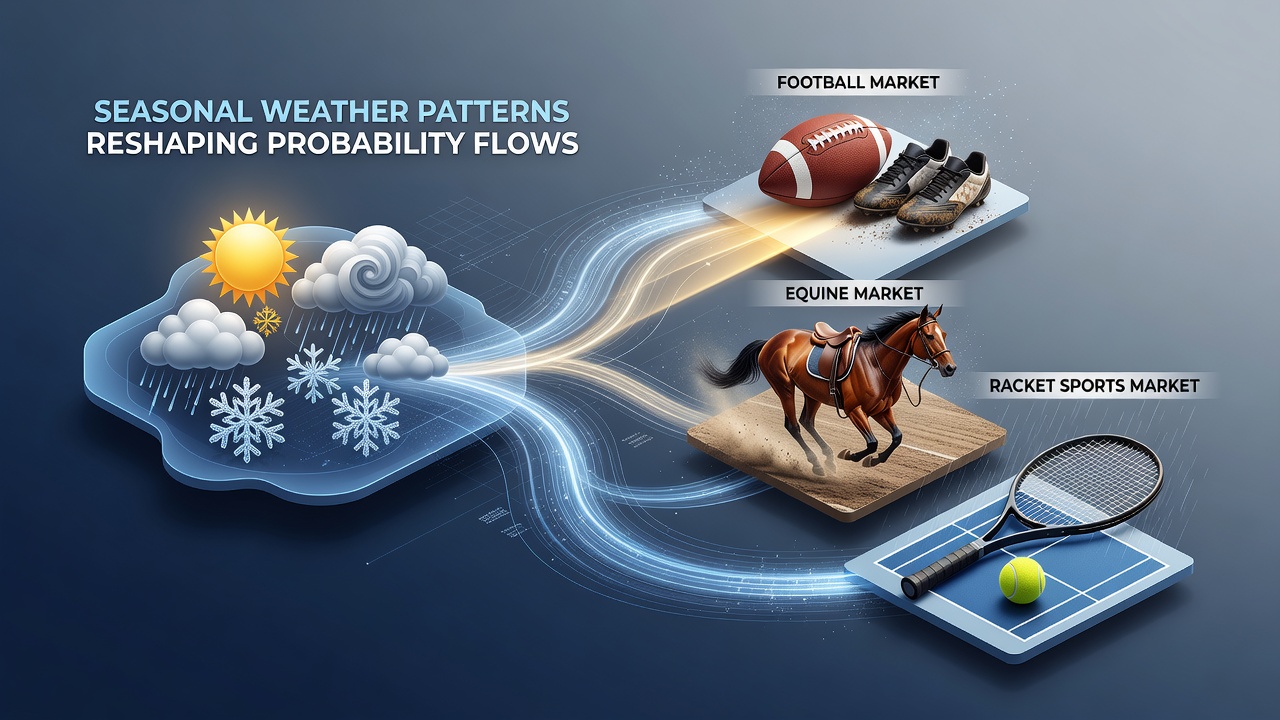
Seasonal Weather Patterns Reshaping Probability Flows Across Football, Equine, and Racket Sports Markets
Weather systems in July 2026 continue to alter performance baselines in multiple sports, and betting markets adjust probability calculations accordingly across football fixtures, equine events and racket competitions. Data from meteorological agencies shows consistent correlations between temperature spikes, precipitation levels and outcome distributions, while analysts track how these variables shift implied probabilities in real time.
Football Markets Respond to Summer Heat and Humidity
July fixtures in European and Asian leagues often coincide with elevated temperatures that exceed 30 degrees Celsius, and players experience measurable declines in sprint capacity and recovery rates under those conditions. Observers note that high humidity compounds fatigue effects, leading to fewer goals in the final 20 minutes of matches and altered patterns in over-under markets. Research from the National Oceanic and Atmospheric Administration links prolonged heatwaves to changes in match tempo, with teams adopting more conservative passing structures that reduce expected goal tallies.
Coaches adjust substitutions earlier when dew points rise, and this tactical shift influences both player prop markets and team total lines. Figures from recent seasons indicate that matches played above 32 degrees Celsius produce 12 percent fewer shots on target compared with moderate temperature games, prompting oddsmakers to recalibrate live probabilities during the first half.
Equine Events and Track Condition Variability
Horse racing circuits experience rapid changes in ground conditions when summer rainfall arrives, and turf surfaces transition from firm to good-to-soft within hours. These alterations affect stride efficiency and finishing times, particularly in races longer than 1600 metres where cumulative fatigue compounds. Studies compiled by the Australian Bureau of Meteorology demonstrate that horses with proven wet-track records achieve higher win percentages once precipitation exceeds 5 millimetres in the preceding 24 hours.
Trainers monitor barometric pressure drops that precede storms, and they often withdraw runners sensitive to soft ground, narrowing field sizes and concentrating probability on remaining contenders. Exacta and trifecta markets reflect these scratches through adjusted payout structures, while place markets widen as public money follows confirmed runners with established mud-running form.

Racket Sports Adjust to Court Surface and Atmospheric Factors
Tennis tournaments scheduled for July contend with both high heat and variable wind patterns that influence ball trajectory and player movement. Hard courts retain more heat than clay, raising core temperatures during extended rallies and increasing unforced error rates after the second set. Researchers at the University of Exeter have documented that serve percentages drop by an average of 4.8 percent when air temperatures surpass 34 degrees Celsius, directly affecting game and set probability models.
Wind gusts above 25 kilometres per hour further complicate baseline rallies, prompting players to shorten swing paths and reduce topspin application. These adjustments appear in live betting lines as break-point conversion rates fluctuate, and accumulator builders incorporate revised hold percentages when forecasts predict sustained breezes. Night sessions under lights introduce additional humidity variables that slow ball speed and extend average rally lengths by two to three shots.
Cross-Sport Probability Interconnections
Market makers integrate weather data feeds into multi-sport models because correlated conditions across regions create simultaneous shifts in football, equine and racket outcomes. A single heatwave affecting southern England may coincide with rainfall in the Midlands, altering both Premier League pre-season friendlies and nearby racecourse conditions on the same afternoon. Bettors who monitor unified weather dashboards identify probability edges where implied odds lag behind updated performance forecasts.
Industry reports from the European Gaming and Betting Association highlight that operators now embed real-time meteorological inputs into pricing engines, reducing latency between weather events and line movements. This integration produces tighter margins in live markets while expanding the range of weather-contingent props available to bettors.
Conclusion
Seasonal weather patterns in July 2026 continue to drive measurable recalibrations across football, equine and racket sports probability flows. Data from multiple agencies confirms that temperature, precipitation and wind variables produce consistent, quantifiable effects on performance metrics, and operators respond by updating odds structures accordingly. Those tracking unified environmental indicators gain access to refined probability assessments that reflect actual conditions rather than historical averages alone.