How Player Substitution Patterns Shift In-Game Lines Across Basketball Leagues and Football Matches During Extended Seasons
Parker Franke · Jun 6, 2026
How Player Substitution Patterns Shift In-Game Lines Across Basketball Leagues and Football Matches During Extended Seasons
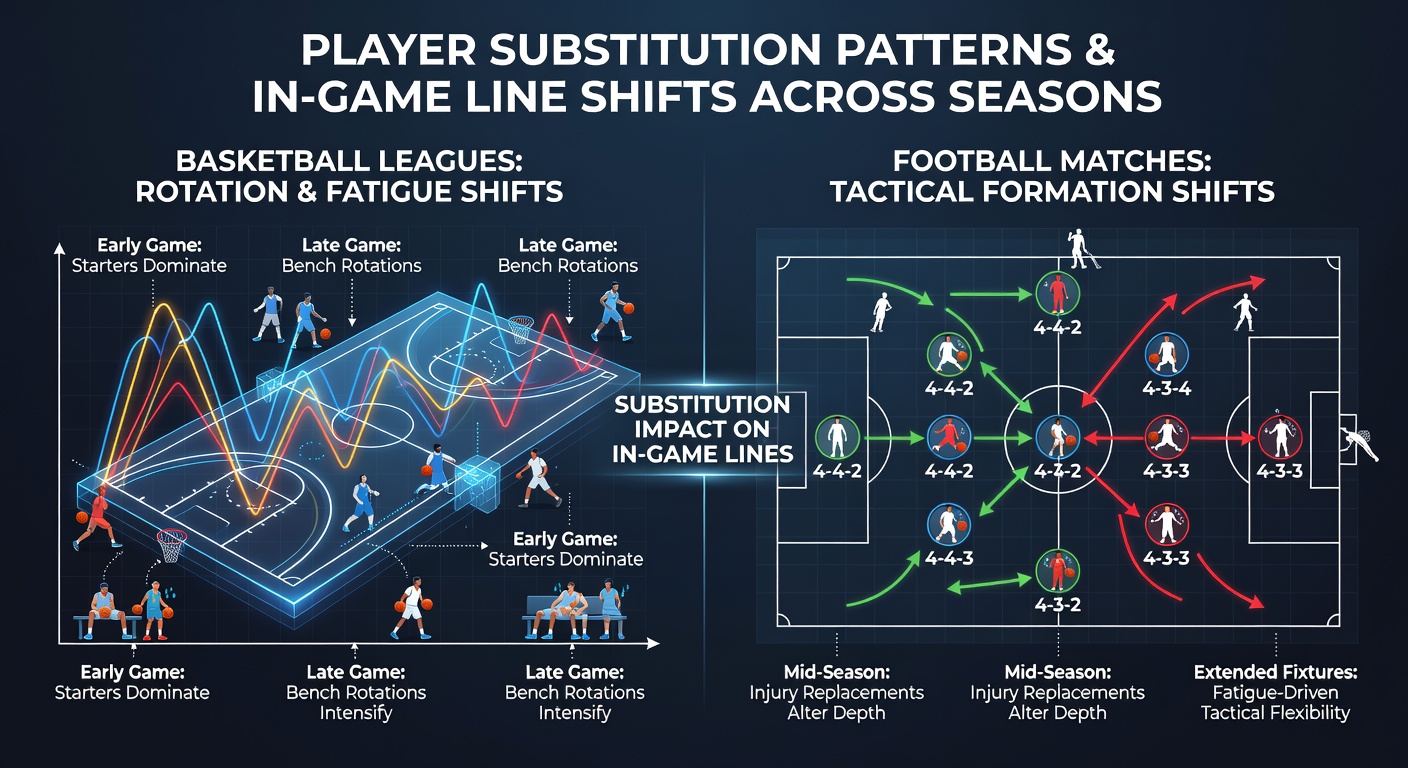
Analysts tracking professional sports have documented clear patterns in how teams deploy substitutions to alter game momentum across basketball leagues and football competitions, especially as schedules stretch into multiple months of play. Data from major organizations shows these adjustments directly influence scoring rates, defensive structures, and overall line movements in extended campaigns that run from autumn through late spring and into June 2026 playoffs or finals stages. In basketball, leagues such as the NBA and EuroLeague operate under rules allowing multiple player changes per game with no limit on total substitutions beyond roster constraints, which leads to frequent rotations designed to manage fatigue. Teams often insert fresh guards or forwards midway through quarters when opposing units show signs of slowing, and records indicate this tactic correlates with temporary spikes in three-point attempts or transition plays. Studies from sports science departments at institutions like the University of Waterloo in Canada highlight that such patterns become more pronounced after the all-star break, when cumulative travel and back-to-back fixtures increase player load across an 82-game regular season plus postseason. Football matches follow stricter substitution limits, typically five per team in most domestic leagues including Serie A and Major League Soccer, with additional windows permitted during extra time in cup competitions. Coaches time these entries to counter specific tactical setups, such as replacing a holding midfielder with an attacking option after the 60-minute mark, and figures from the International Olympic Committee-affiliated research networks reveal corresponding shifts in possession percentages and shot creation during those intervals. Extended seasons in European domestic leagues and international tournaments amplify these effects because squads balance league fixtures with continental commitments, prompting earlier or more conservative changes to preserve key performers for later rounds.Basketball Substitution Dynamics in Prolonged Campaigns
Observers note that basketball substitution sequences often cluster around dead-ball situations like timeouts or free throws, allowing coaches to deploy units tailored to matchup advantages. In the 2025-2026 NBA season stretching toward June finals, teams have shown increased reliance on bench scoring bursts during the third quarter, where data logs indicate average point differentials widening by 4 to 6 points when starters rest for 6 to 8 minutes. Leagues maintain detailed tracking systems that capture these micro-adjustments, and cross-referenced reports from the Australian Institute of Sport demonstrate similar rotation strategies in the NBL during its summer schedule overlaps with international windows.
Extended seasons introduce variables such as load management protocols, where organizations limit minutes for star players to reduce injury risk, and this practice directly modifies in-game lines by introducing younger or reserve talent earlier than in shorter campaigns. Analysts reviewing play-by-play archives find that defensive efficiency ratings improve measurably when specialized rim protectors enter during opponent fast-break attempts, while offensive spacing changes when stretch forwards replace traditional centers.
Football Match Adjustments Across Lengthy Schedules
Football substitution patterns differ because of the continuous nature of play and limited windows, forcing decisions that impact both immediate tempo and remaining match duration. In Serie A and Bundesliga fixtures during the 2025-2026 campaign, records show midfield replacements occurring most frequently between the 55th and 75th minutes to sustain pressing intensity or shift formation shapes. Research compiled by academic groups at the University of Sydney indicates these timed entries correlate with measurable upticks in expected goal values when attacking players replace defensive ones late in halves.
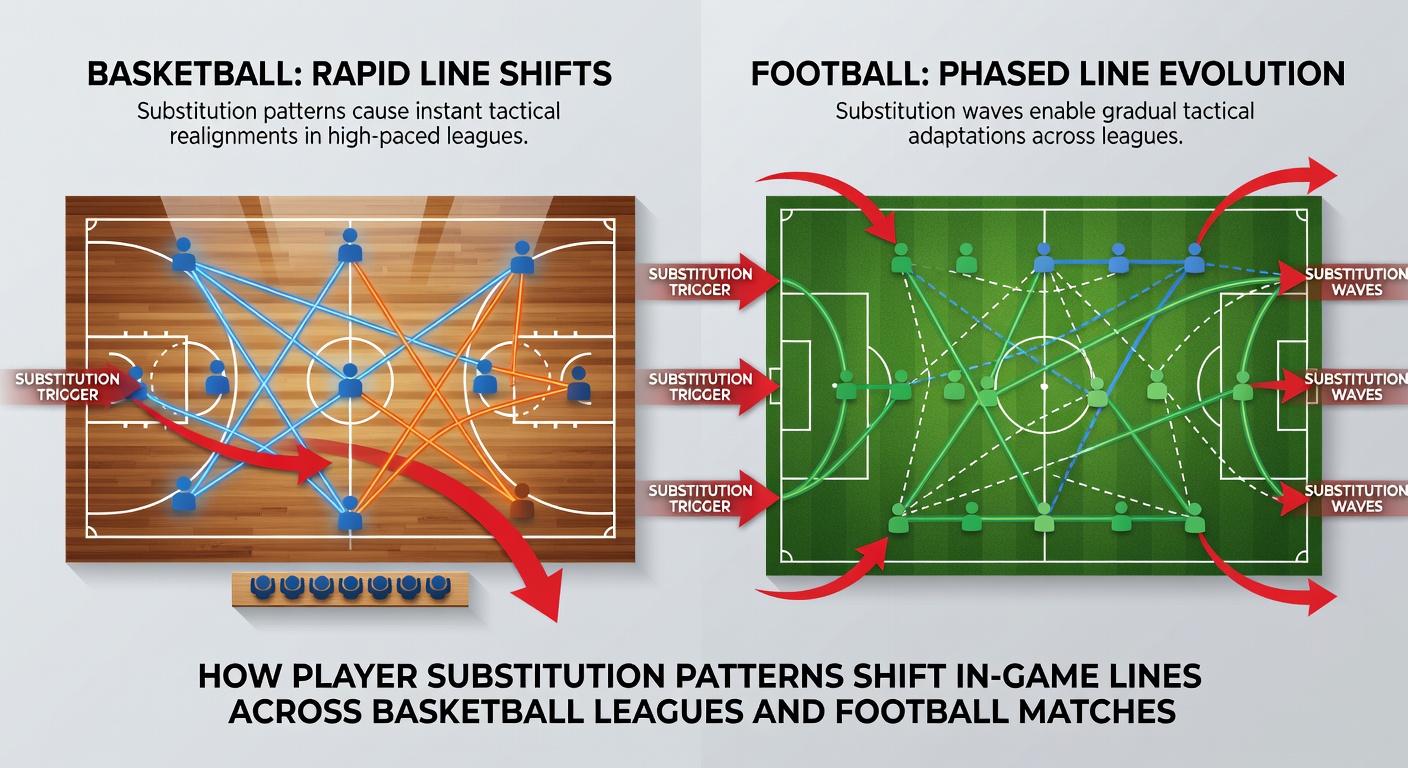
Longer seasons compound fatigue effects in football, where domestic cups and European ties overlap with league play through spring and into early summer. Teams respond by prioritizing squad depth, and evidence from match reports reveals that late substitutions often stabilize defensive lines against counterattacks or inject pace to chase results. Patterns emerge most clearly in back-to-back weeks of fixtures, where rotation frequency rises to maintain performance consistency across competitions.
Comparative Patterns and Seasonal Influences
Comparisons between the two sports reveal shared principles despite differing rules, as both rely on substitution timing to recalibrate energy distribution and tactical focus. Basketball allows greater fluidity with unlimited changes, whereas football emphasizes precision within constrained slots, yet data sets from both domains show parallel increases in substitution frequency during the latter stages of extended seasons. Organizations such as the Asian Football Confederation have published aggregated statistics indicating how these shifts influence overall match outcomes in tournaments spanning multiple months.
June 2026 contexts, including potential international tournaments or league conclusions, further accentuate these dynamics because accumulated wear from prior months prompts more calculated personnel moves. Tracking systems across leagues capture resulting changes in metrics like points per possession in basketball and pass completion rates in football, providing objective records of how substitutions reshape game lines without altering fundamental regulations.
Conclusion
League data and academic reviews confirm that substitution patterns serve as primary levers for adjusting in-game trajectories in both basketball and football throughout prolonged seasons. Teams apply these adjustments according to sport-specific constraints and schedule demands, with measurable effects on scoring, possession, and efficiency metrics documented consistently across competitions heading into mid-2026. Continued monitoring through official tracking platforms allows for ongoing analysis of these established trends.