Environmental Edges: Weather Whipsaws Reshaping Horse Tracks, Cricket Pitches, Soccer Fields, and Outdoor Tennis Courts
Parker Franke · Apr 1, 2026
Environmental Edges: Weather Whipsaws Reshaping Horse Tracks, Cricket Pitches, Soccer Fields, and Outdoor Tennis Courts
Horse Tracks Transformed by Sudden Storms and Droughts
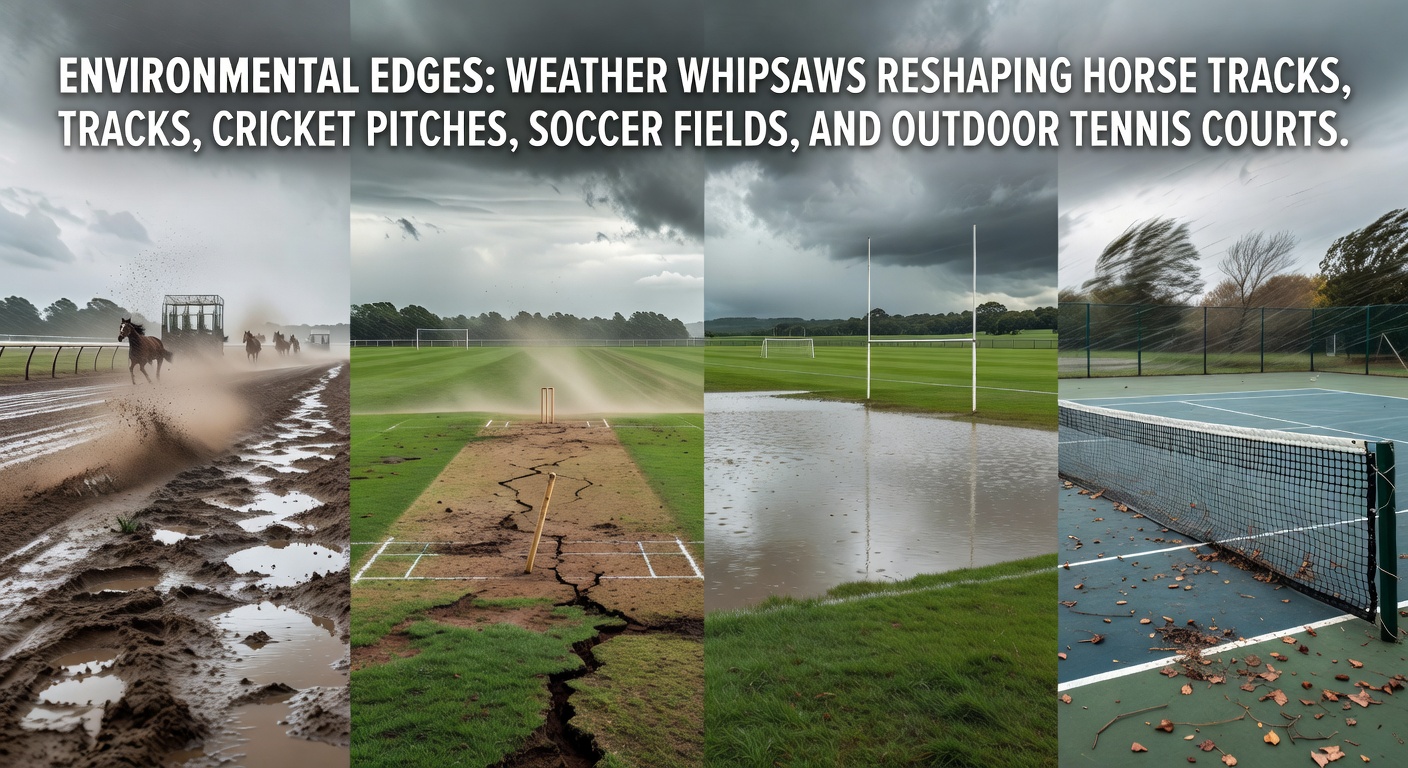
Heavy downpours turn dirt tracks into slippery quagmires where horses struggle for grip, while prolonged dry spells harden surfaces into unforgiving concrete-like slabs; researchers at the University of Kentucky's Maxwell H. Gluck Equine Research Center document how such whipsaws alter stride lengths and racing times by up to 10% in extreme cases. Data from major tracks like Churchill Downs reveals that after a 2-inch rain event, track variants shift dramatically, favoring front-runners who splash through less mud, whereas bone-dry conditions propel closers with sustained speed. And in April 2026, observers noted unusual temperature swings across the U.S. Midwest—freezing nights followed by 70-degree days—that caused frost heaves on turf courses, leading to cancellations at tracks like Keeneland where officials cited safety risks from uneven footing.
But here's the thing: synthetic tracks, increasingly common since the mid-2000s, resist these changes better, absorbing moisture without becoming treacherous; studies show they maintain consistent speeds regardless of 40% humidity jumps or wind gusts over 20 mph. Turf tracks, on the other hand, wilt under summer scorchers, with grass roots dying off when soil moisture drops below 15%, forcing groundskeepers to irrigate furiously or resod entire stretches. One case from Ascot in 2025 illustrated this perfectly, as a mid-race hailstorm left divots that crews patched desperately, altering final furlong biases toward inside paths.
Soil Science Behind the Shifts
Soil compaction rises sharply after freeze-thaw cycles common in spring, compacting clay-heavy dirt to depths of 6 inches and slowing elite sprinters by seconds per furlong; experts track these via penetrometers, revealing readings spiking from 200 psi in firm ground to over 400 psi post-rain. Wind plays a subtler role too, whipping sand particles across surfaces and creating micro-ruts that trip horses mid-stride, especially on looser coastal tracks like Del Mar.
Cricket Pitches Cracking Under Climate Pressure
Sun-baked pitches in arid regions develop vicious cracks by day three of a Test match, allowing spinners to extract turn that wasn't there on day one, while overnight rains soften the surface overnight, handing seamers reverse swing advantages; according to pitch reports from the Australian Bureau of Meteorology, such volatility has intensified with erratic monsoon patterns. In subcontinental venues like Chennai, temperatures soaring past 100°F dry out topsoil rapidly, turning black-soil pitches into minefields where balls explode off uneven bounce, whereas cooler, damper English pitches at Lord's favor swing bowling when dew arrives post-sunset.
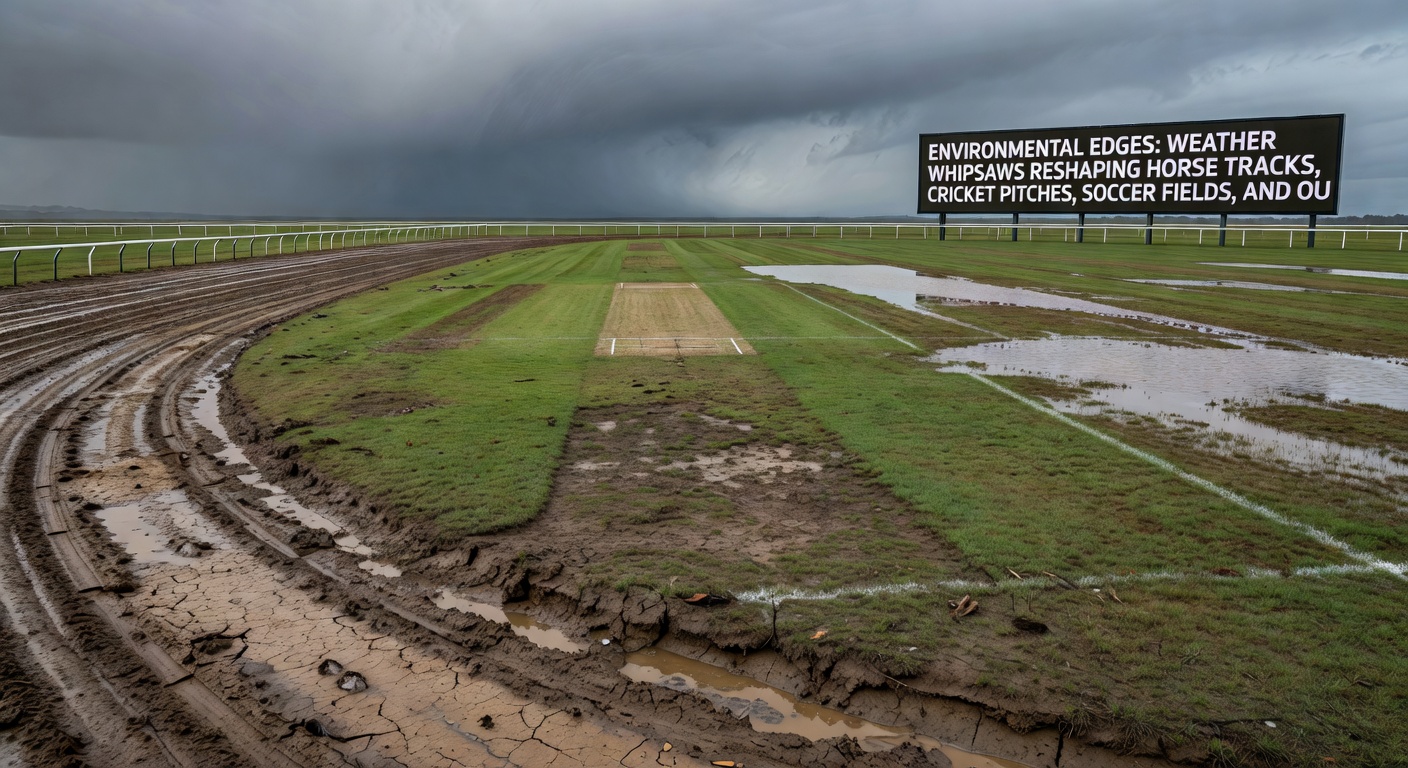
Turns out, moisture content swings from 20% to 5% within 48 hours reshape entire innings strategies; curators measure this with moisture probes, adjusting rollers to combat cracks widening to half-inch gaps. And April 2026 brought freakish weather to IPL grounds in India, where unseasonal hail pelted Mumbai's Wankhede Stadium pitch during prep, delaying matches and leaving curators to relay grass overnight—a process that altered expected pace-friendly behavior into something slower and lower. Observers note how wind gusts exceeding 30 km/h scatter protective covers, exposing pitches to selective wetting that creates two-paced nightmares for batsmen.
Curator Challenges in the Face of Whipsaws
Groundstaff battle these elements daily, vacuuming excess water after flash floods or watering meticulously during droughts, but data indicates pitches degrade 25% faster under climate-amplified swings; one study from a Perth Test in 2024 showed a sudden 15°C drop overnight transforming a flat track into a spinner's paradise mid-session.
Soccer Fields Slipping into Chaos
Rain-lashed fields turn divot-filled bogs where studs sink deep, slowing passes and favoring long balls over intricate play, yet a quick dry-out under wind makes the same surface lightning-fast and bouncy; FIFA's turf standards highlight how European pitches, often hybrid grass-synthetic, hold up better than pure natural ones in Latin America. Figures from Premier League grounds reveal ball roll speeds varying by 30% post-downpour, with waterlogged areas collecting in low spots and creating puddles that deflect shots unpredictably.
So frozen pitches in northern climes crack under January frosts, forcing heated under-soil systems that drain batteries and budgets, while heatwaves scorch grass to bald patches, compelling reseeding mid-season. In April 2026, MLS fields in the Pacific Northwest endured biblical rains—over 4 inches in 24 hours—that submerged Seattle Sounders' home turf, postponing fixtures until aerators cleared standing water and redistributed sand infill. Wind whips across open stadiums too, gusting balls off course during corners and free kicks, particularly on coastal venues like those in MLS's Western Conference.
Maintenance Tech Fighting Back
Automated irrigation and drainage systems now mitigate some whipsaws, pumping out 1,000 gallons per minute from subsurface pipes, but extreme events overwhelm them; researchers observe that repeated wet-dry cycles weaken root zones, reducing grass density by 40% over a season and inviting weed invasions.
Outdoor Tennis Courts: From Slick Clay to Slippery Grass
Clay courts in Paris soak up rain like sponges, swelling and cracking underfoot to slow serves by 5-10 mph while boosting topspin rallies, whereas a hot sun bakes them rock-hard for baseline slugfests; Roland Garros data tracks these shifts meticulously. Grass courts at Wimbledon turn treacherous after light showers, with slips accounting for 15% of injuries as the ball skids low and fast pre-wetness, but heavy rain floods baselines into mud pits halting play entirely.
Hard courts outdoors, like those at the Australian Open, shrug off most rain thanks to quick-drying acrylic layers, yet wind tunnels in stadiums gust serves wide and disrupt tosses; Melbourne Park logs show humidity spikes above 80% making grips slicker, extending points. Now, April 2026's wild swings hit European clay seasons hard, with Monte Carlo's courts battered by Mediterranean storms that washed away red dust layers, forcing all-red resurface and delaying qualifying rounds. Observers point to ozone layer tweaks amplifying UV exposure, bleaching grass courts prematurely and hastening wear.
Surface-Specific Weather Vulnerabilities
Tennis officials deploy leaf blowers against dew and heated roofs for partial cover, but full enclosures remain rare; studies indicate clay's porosity leads to 20% speed variances from dawn mist versus midday blaze, reshaping match dynamics profoundly.
Broader Patterns and Future Forecasts
Climate models predict intensified whipsaws—more intense but shorter storms, prolonged droughts punctuated by deluges—across global venues, with IPCC reports noting 20-30% rises in extreme weather frequency by 2030; sports bodies adapt via climate-resilient hybrids, like reinforced turfgrasses tested in U.S. labs. Horse racing shifts to all-weather ovals in rainy climes, cricket experiments with pitch covers that seal moisture, soccer embraces LED grow lights for winter pitches, and tennis eyes retractable roofs proliferating since Beijing 2008.
What's interesting is how interconnected these are; a single low-pressure system can ripple from Atlantic horse meets to English soccer derbies and clay-court swings, all within days. Ground crews worldwide log data via apps, sharing insights to preempt disasters, while satellite weather feeds give hours-head warnings that save seasons.

Yet challenges persist, especially in developing regions where budgets limit tech; one African soccer federation reported 50% more fixture losses to weather in 2025 versus a decade prior.
Conclusion: Adapting to Nature's Unpredictable Rhythm
Weather whipsaws continue reshaping these surfaces in profound ways, from mud-slogging horses to cracking cricket pitches, slippery soccer swards, and evolving tennis arenas; data underscores the need for resilient materials and predictive tools, as seen in April 2026's disruptions that tested limits worldwide. Sports evolve alongside the elements, with innovations bridging gaps between nature's fury and human endeavor, ensuring play persists amid the storms.