Altitude's Quiet Grip on Market Swings Across High-Elevation Tracks and Open-Air Arenas
Nils Russell · Jun 10, 2026
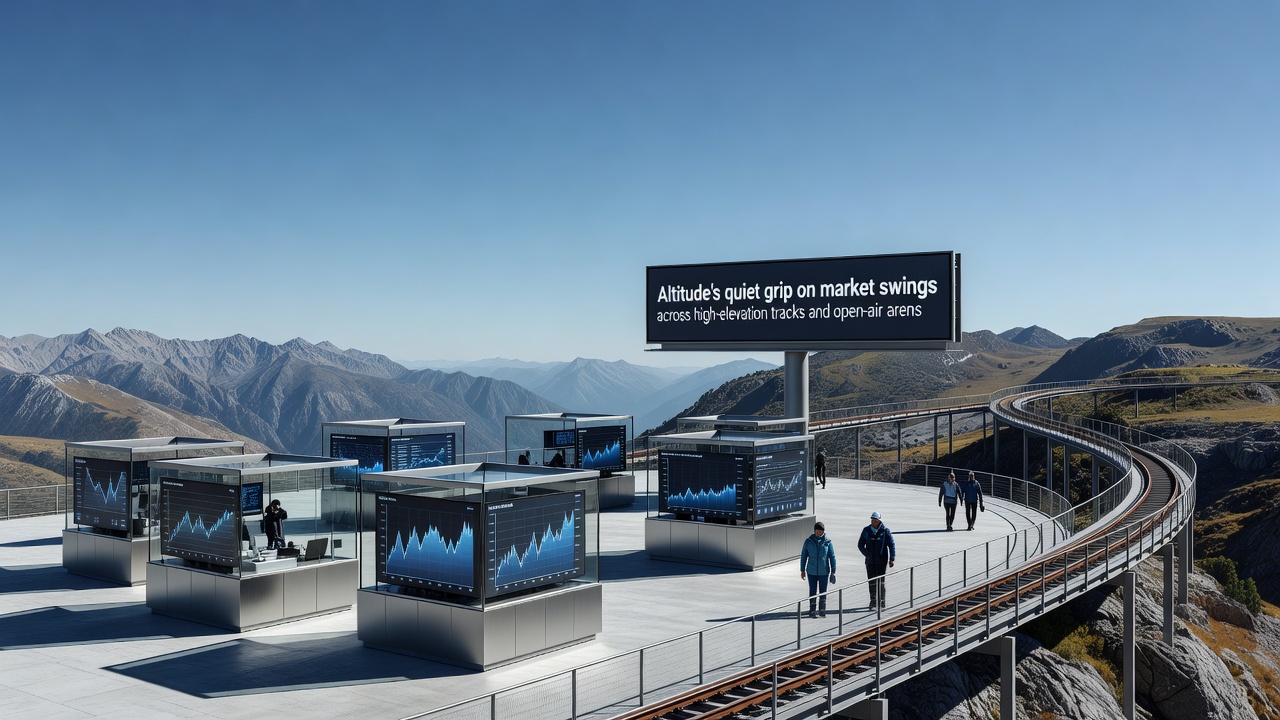
Altitude's Quiet Grip on Market Swings Across High-Elevation Tracks and Open-Air Arenas
High-altitude venues exert measurable effects on athletic output, which in turn shape betting lines and live odds fluctuations across horse racing circuits and various open-air competitions; researchers tracking physiological responses note that reduced oxygen availability at elevations above 1,500 meters alters endurance capacity, ball trajectory, and recovery rates in ways that betting platforms must account for when adjusting spreads during events.
Physiological Mechanisms at Play
Studies from institutions such as the University of Colorado School of Medicine document how partial pressure of oxygen drops at altitude, prompting earlier onset of fatigue in sustained efforts while sometimes enhancing short-burst actions due to lower air density; this dual impact registers clearly in horse racing at tracks like those in the Andean region or Colorado circuits, where late-race pace collapses become more frequent and trigger rapid line movements on place and exacta markets. Data collected through wearable sensors during training sessions at these sites reveal average reductions in maximal oxygen uptake of 10 to 15 percent, figures that feed directly into pre-event modeling used by oddsmakers.
Effects on Track and Field Sports
Horse racing records from high-elevation meetings indicate that favorites drawn from lower-altitude stables show diminished win percentages compared with their historical benchmarks, prompting market makers to widen morning-line margins and create volatility once live betting opens. Observers monitoring June 2026 fixtures at similar venues recorded sharper swings in the final two furlongs, with place payouts shifting by margins exceeding typical variance at sea-level tracks; such patterns arise because cardiac output demands rise while glycogen stores deplete faster, altering expected finishing orders that accumulators and single-race wagers depend upon.
Ball Flight and Arena Dynamics
In open-air arenas hosting tennis or cricket, thinner air reduces drag on projectiles, allowing serves and lofted shots to travel farther and faster than equivalent efforts at lower elevations; performance databases compiled by the International Tennis Federation illustrate ace percentages rising between 4 and 8 percent at venues above 2,000 meters, data points that betting exchanges incorporate when recalibrating game and set odds mid-match. Cricket analysts similarly track carry on lofted drives and swing rates on seam deliveries, noting that boundary percentages climb measurably and force in-play adjustments to session totals and bowler markets. These aerodynamic shifts produce cascading effects on accumulator builds when bettors combine high-altitude fixtures with lowland events, because correlated deviations from baseline statistics emerge consistently across compiled historical sets.
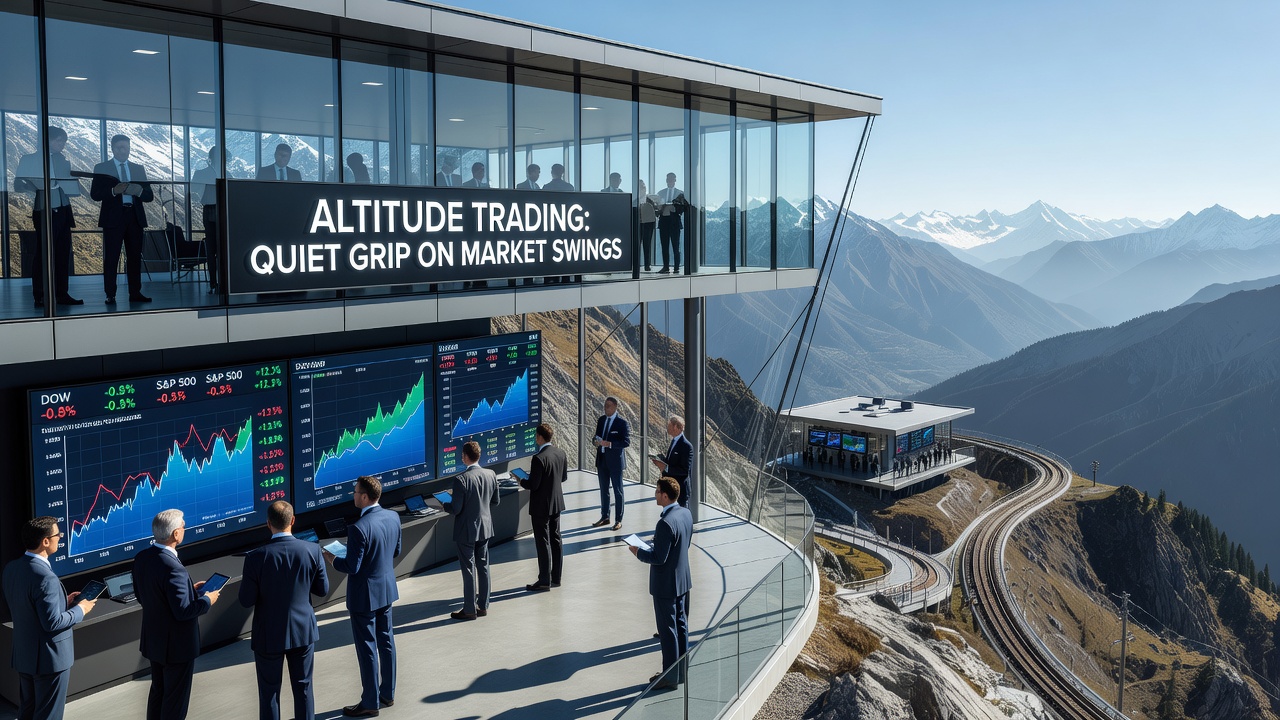
Market Response and Odds Volatility
Betting platforms respond to these environmental variables by layering altitude coefficients into their algorithms, yet residual uncertainty remains when weather fronts interact with elevation, creating pockets of mispricing that surface during live trading windows. Reports issued by the Australian Institute of Sport highlight how acclimatization timelines vary across athlete cohorts, with some competitors requiring 10 to 14 days for partial adaptation while others exhibit persistent deficits; such individual differences amplify variance in head-to-head and totals markets, particularly when schedules compress travel between disparate elevations. In June 2026, several high-profile meetings demonstrated accelerated odds movement once early heat results contradicted model projections, underscoring the speed at which market participants incorporate on-site telemetry.
Comparative Data Across Regions
European and North American regulatory filings, alongside research from the Canadian Sport Institute, compile longitudinal datasets that separate altitude effects from other variables such as surface type and scheduling; these records show systematic underperformance among non-acclimated entrants in endurance-heavy disciplines, whereas power-dominant actions display modest gains. Bettors who layer multi-leg wagers across mixed-elevation cards encounter amplified risk because covariance between legs deviates from lowland assumptions, prompting platforms to adjust correlation matrices in their pricing engines. Industry analyses further reveal that volume spikes occur in niche proposition categories like first-serve percentages or sectional timing when altitude venues appear on the schedule, because informed participants seek edges in less liquid markets where public awareness of environmental factors lags.
Long-Term Patterns and Adjustments
Over multiple seasons, oddsmakers refine their inputs by integrating meteorological archives with performance logs, yet sudden barometric shifts at altitude continue to generate outsized swings that propagate through accumulator pools and in-running books. Training facilities located at intermediate elevations now publish acclimatization protocols that teams and stables follow, data that gradually enters public models and reduces but does not eliminate the information asymmetry that fuels market movement. Those monitoring cross-sport portfolios note that basketball and football contests staged in thinner air exhibit altered foul rates and substitution patterns tied to recovery demands, further diversifying the set of variables that require real-time recalibration.
Conclusion
Altitude therefore functions as a persistent but often understated modulator of both physical output and pricing dynamics, compelling continuous updates to forecasting frameworks used across high-elevation tracks and arenas. As more granular sensor data becomes available and scheduling incorporates explicit altitude blocks, the magnitude of associated odds adjustments may narrow, although complete elimination of variance tied to elevation remains unlikely given inherent physiological limits and variable acclimatization responses.